Key Takeaways
- Wood doors offer natural textures and flexible decorative options but require moisture control and regular maintenance.
- Aluminum doors provide dimensional stability, corrosion resistance and versatile surface finishes. Thermal performance depends on profile design and insulation.
- Composite doors combine different materials to achieve specific structural and insulation properties, with performance varying by composition.
- Material selection should consider climate, manufacturing processes, customization requirements and long-term maintenance.
- Huaye provides OEM/ODM aluminum entrance door solutions, supported by over 10,000 design combinations and a 10,000 m² factory production area.
Choosing an exterior door involves evaluating more than appearance and initial cost. Material composition, manufacturing processes, weather resistance, thermal insulation and customization capabilities all influence long-term performance.
For distributors, contractors and project buyers sourcing custom made external doors, understanding the differences between wood, aluminum and composite materials helps establish suitable product specifications. Cooperation with experienced external door manufacturers also helps ensure that design requirements are translated into consistent production standards.
This guide compares the three materials in terms of construction, processing characteristics, performance and customization potential, with a focus on aluminum entrance door solutions for architectural projects.
Exterior Door Materials and Construction
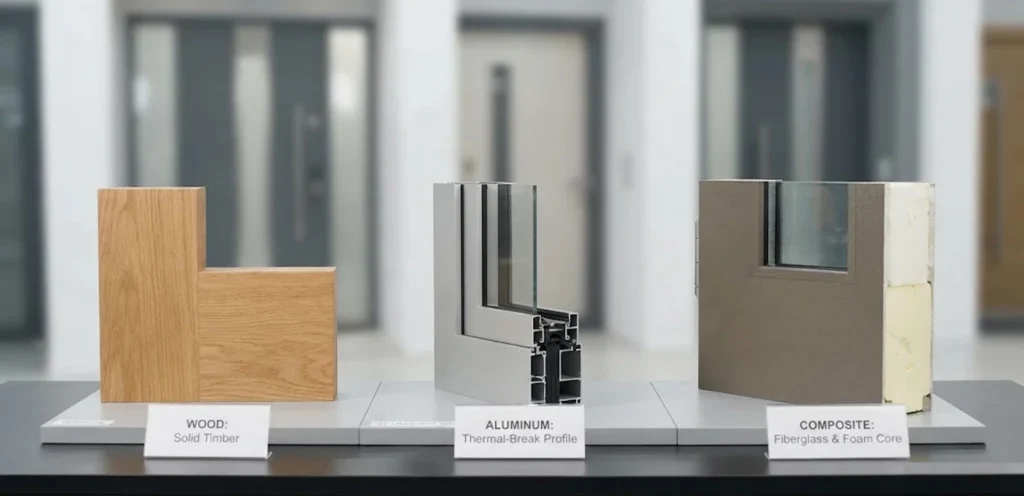
Exterior doors generally use wood, aluminum or composite materials. Their structural composition determines dimensional stability, insulation potential, surface treatment options and maintenance requirements.
- Wood doors: Common constructions include solid wood, engineered wood and laminated timber. Solid wood emphasizes natural grain and texture, while engineered wood and laminated structures improve structural consistency through bonded layers.
- Aluminum doors: Typically consist of aluminum alloy profiles, door frames, door panels, sealing strips, glazing units and hardware. Thermal-break profiles incorporate insulating materials between interior and exterior aluminum sections to reduce heat transfer.
- Composite doors: Combine materials such as fiberglass-reinforced polymers, resin-based skins, timber components and foam cores. Their internal structures vary according to the manufacturer’s design and intended performance.
| Material | Main Components | Structural Characteristics |
|---|---|---|
| Wood | Solid timber, engineered wood or laminated timber | Natural appearance; sensitive to moisture changes |
| Aluminum | Aluminum profiles, panels, glazing and hardware | Lightweight structure; high dimensional stability |
| Composite | Fiberglass, resin, timber or foam core | Multi-material construction; performance depends on composition |
When evaluating exterior door structures, buyers should consider both the surface material and internal construction. For aluminum doors, profile configuration, thermal-break design, panel structure and sealing details all influence the finished product’s performance.
💡Frequently Asked Questions
Q: What are the main structural differences between wood, aluminum and composite exterior doors?
Wood doors use solid or engineered timber, aluminum doors rely on assembled alloy profiles, and composite doors combine different materials such as fiberglass skins and insulated cores. Their structural differences influence weight, stability, insulation and customization options.
Processing Characteristics of Different Exterior Door Materials
Wood, aluminum and composite materials require different manufacturing processes and forming techniques. These differences affect structural integrity, dimensional accuracy, surface quality and the scope of customization.
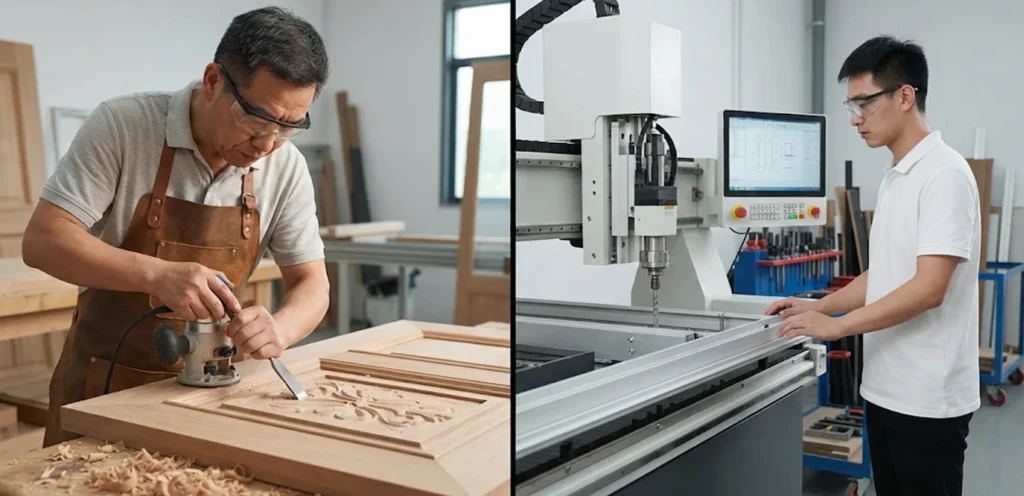
- Wood processing: Includes timber drying, moisture-content control, cutting, planing, milling, joint assembly, core construction and surface coating. Solid wood supports carving and decorative detailing but is susceptible to humidity-related movement. Engineered wood and laminated timber offer more consistent structures, although bonding quality and edge protection remain important.
- Aluminum processing: Starts with extruded profile selection, followed by precision cutting, CNC milling, drilling, corner crimping and mechanical assembly. Surface treatments may include powder coating, anodizing or wood-grain transfer. Glazing, weather seals and hardware are then installed. High machining accuracy and repeatable assembly processes make aluminum suitable for standardized production and multiple customized configurations.
- Composite material processing: Commonly involves fiberglass-reinforced materials, resin, timber components or foam cores. Manufacturing processes include molding, pressing, lamination, bonding and edge sealing. Key control points include forming parameters, bonding consistency, core stability and edge protection. Dimensional and structural modifications may be limited by existing molds and internal construction.
Overall, wood processing focuses on moisture control and joint quality, aluminum processing emphasizes profile precision and mechanical connections, while composite manufacturing depends on forming control and bonding integrity.
💡Frequently Asked Questions
Q: Which exterior door material is most suitable for standardized mass production?
Aluminum is generally well suited to standardized production because extrusion profiles, CNC machining, mechanical connections and surface finishing can be organized into repeatable processes. Production consistency still depends on equipment precision, assembly standards and quality control.
Exterior Door Performance and Environmental Suitability
Exterior door performance depends on material properties, structural design, component quality and installation. No material is universally superior across all environments.
| Performance Factor | Wood Doors | Aluminum Doors | Composite Doors |
|---|---|---|---|
| Weather resistance | Requires effective coating and moisture protection | Generally good with appropriate alloy and surface treatment | Depends on skin material and edge sealing |
| Corrosion resistance | Vulnerable to moisture-related deterioration | Good atmospheric corrosion resistance; coastal exposure requires consideration | Depends on material composition and hardware |
| Thermal insulation | Depends on timber structure and door thickness | Requires thermal-break profiles and effective sealing | Depends on core material and overall construction |
| Dimensional stability | Affected by moisture absorption and release | Generally stable under normal service conditions | Depends on material combination and manufacturing quality |
| Maintenance | Periodic coating inspection and refinishing | Routine cleaning and hardware inspection | Depends on surface durability and edge protection |
Important factors when selecting exterior doors include:
- Weather exposure: Rainfall, humidity, temperature fluctuations, UV exposure and coastal salt spray should be considered during material selection.
- Thermal performance: Whole-door U-value is more meaningful than the thermal conductivity of an individual material. Profile design, insulation, glazing and sealing all contribute.
- Corrosion protection: Aluminum doors require suitable surface treatment. In coastal environments, coating quality and contact between dissimilar metals also need attention.
- Maintenance requirements: Wood doors may require periodic refinishing, while aluminum and composite doors require inspection of surface finishes, hardware, seals and edge protection.
For technical evaluation, EN 14351-1 provides a framework for assessing relevant performance characteristics of external pedestrian doorsets, including air permeability, watertightness, wind resistance and thermal transmittance. Actual performance should be verified through applicable product test results.
💡Frequently Asked Questions
Q: Do aluminum exterior doors provide good thermal insulation?
Yes, when designed with suitable thermal-break profiles, insulation, glazing and weather seals. Buyers should evaluate the thermal transmittance of the complete door assembly rather than the aluminum material alone.
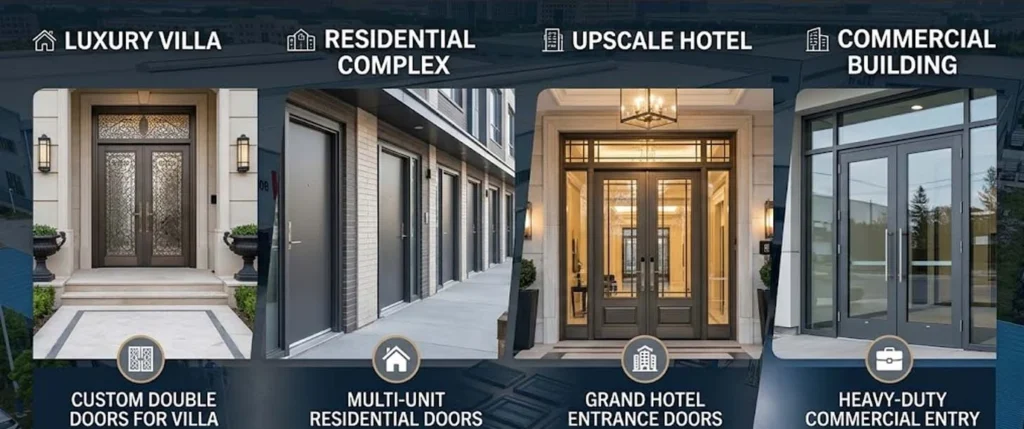
Customization Limitations of Different Exterior Door Materials
Different materials have distinct processing characteristics, which influence achievable dimensions, decorative details, surface finishes and production consistency.
- Wood doors: Support carving, panel designs and natural finishes. However, large dimensions and complex shapes require careful structural reinforcement and moisture control. Natural timber variations may also affect batch consistency.
- Aluminum doors: Support different profile configurations, colors, surface finishes, glazing layouts and hardware combinations. Custom dimensions and decorative designs are achievable within profile, tooling and structural limitations.
- Composite doors: Offer flexibility in surface textures, colors and panel designs. However, complex shapes, hardware positioning and dimensional adjustments may be restricted by molding processes and core construction.
| Customization Factor | Wood Doors | Aluminum Doors | Composite Doors |
|---|---|---|---|
| Dimensions | Limited by timber stability and structure | Flexible within profile and structural limits | Depends on molding and core construction |
| Surface finishes | Paint, stain and natural wood texture | Powder coating, anodizing and wood-grain finishes | Depends on skin material and coating |
| Decorative designs | Carving and panel detailing | Profile combinations and decorative panels | Molded textures and surface patterns |
| Glazing options | Depends on frame structure | Flexible glazing configurations | Depends on panel and frame construction |
| Hardware integration | Requires suitable reinforcement | Supports coordinated hardware machining | Depends on internal reinforcement |
| Batch consistency | Affected by natural timber variation | Suitable for standardized production | Depends on molding and material consistency |
For buyers sourcing custom made external doors, aluminum offers a practical balance between design flexibility and repeatable manufacturing. When comparing external door manufacturers, buyers should confirm available profile systems, finish options, dimensional tolerances, glazing specifications and hardware compatibility before bulk production.
💡Frequently Asked Questions
Q: Can aluminum exterior doors be customized in different colors and designs?
Yes. Aluminum exterior doors can be customized through profile configurations, panel designs, surface finishes, glazing layouts and hardware selections. Available options depend on the manufacturer’s production capabilities and product specifications.
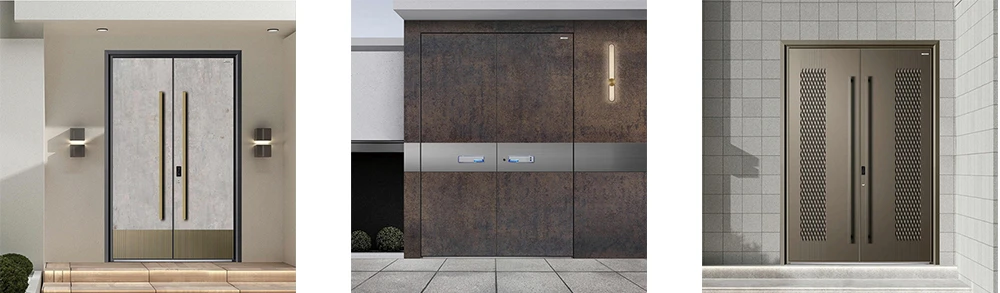
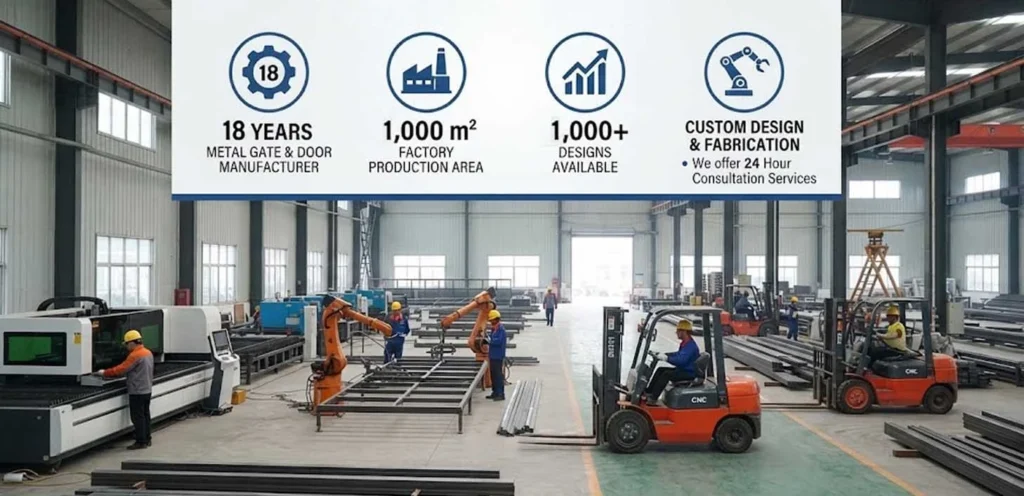
Huaye Aluminum Exterior Door Manufacturing Advantages
Established in 2008, Huaye has 18 years of manufacturing experience in customized metal doors and related products. For aluminum entrance door projects, the company provides OEM/ODM services and supports different design and configuration requirements.
Key manufacturing and customization capabilities include:
- Extensive design combinations: More than 10,000 combinations of door styles, colors, glass designs and hardware accessories, supporting different architectural preferences and project specifications.
- OEM/ODM services: Customized product development based on buyer requirements, including door appearance, dimensions, color selection and component configurations.
- Production facilities: A factory production area of approximately 10,000 m² supports manufacturing and order coordination.
- Customized finishes and designs: Color and style options can be adjusted according to project requirements and available production specifications.
- Responsive communication: 24-hour consultation service supports communication throughout product selection and customization.
These capabilities support distributors, wholesalers and project buyers who require flexible product configurations and coordinated manufacturing services.
💡requently Asked Questions
Q: What should buyers confirm before ordering customized aluminum entrance doors?
Buyers should confirm door dimensions, opening direction, profile specifications, color and surface finish, glazing requirements, hardware configuration, order quantity, packaging and delivery arrangements. Technical drawings and approved samples should be reviewed before mass production.
Looking for a manufacturing partner for customized aluminum entrance doors? Huaye provides OEM/ODM solutions with extensive design combinations, flexible product configurations and dedicated consultation support.
Contact Huaye to discuss your project specifications, customization requirements and wholesale purchasing plans.
| OEM&ODM Factory | Email:tom@huayegate.com | Whatapp:+86 13055509263 |
Wood, aluminum and composite exterior doors each offer distinct advantages in construction, performance and customization. Wood provides a natural appearance, composite materials combine different structural properties, while aluminum offers dimensional stability, versatile finishes and standardized manufacturing potential.
For distributors, contractors and project buyers, selecting the right material requires evaluating the complete door structure, environmental conditions and manufacturing capabilities. A clear understanding of these factors helps ensure that product specifications align with project requirements.