Key Takeaways
- Surface Treatment: Powder coating creates a protective organic coating with extensive color and texture options, while anodizing forms an integrated oxide layer that preserves aluminum’s natural metallic appearance.
- Performance Comparison: Powder coating offers greater decorative flexibility, whereas anodizing generally provides higher surface hardness and wear resistance. Corrosion and weather resistance depend on the quality of the specific treatment process.
- Application Selection: The appropriate finish should be determined by installation conditions, exposure to moisture and UV radiation, maintenance requirements, and architectural design.
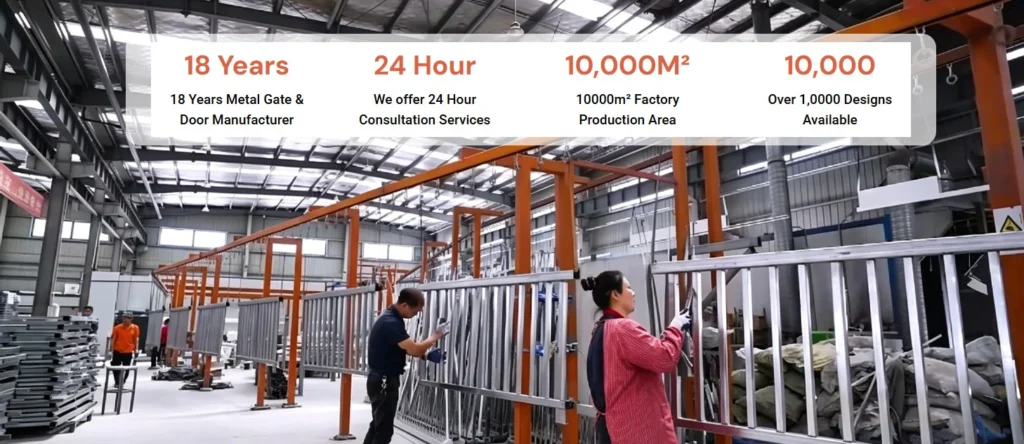
- Huaye’s Customization Capabilities: With 18 years of manufacturing experience and approximately 10,000㎡ of factory space, Huaye provides OEM/ODM solutions for custom aluminum railing projects, including customized colors, designs, dimensions, and accessories.
Surface Finishing Processes for Custom Aluminum Railing
Powder coating and anodizing are two common surface treatment methods for aluminum railings. They differ in their coating formation principles, surface structures, decorative effects, and protective properties, all of which influence the appearance and long-term performance of the finished products.
Powder Coating
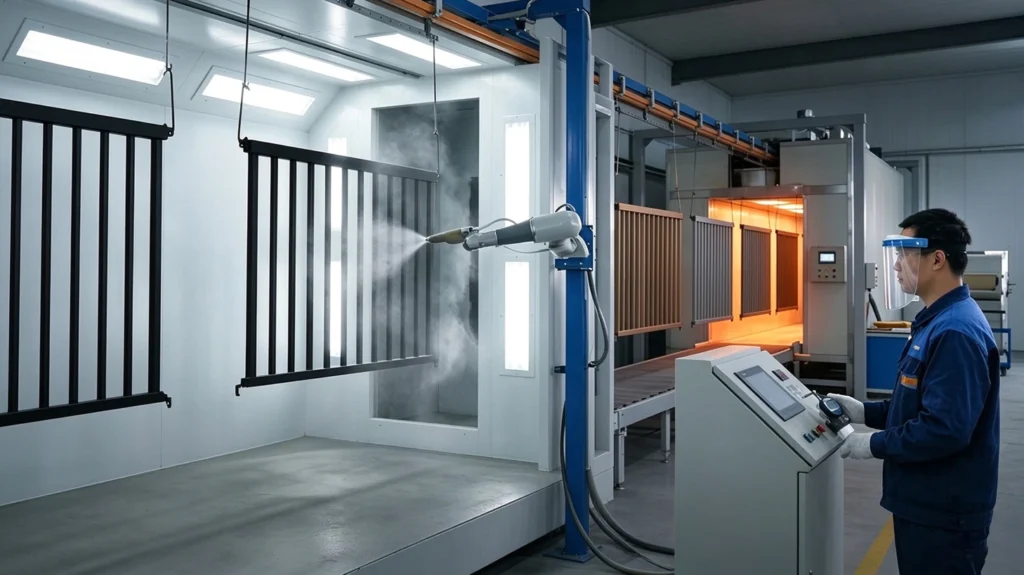
Powder coating uses electrostatic spraying to apply powder onto the aluminum surface, followed by heat curing to form a protective organic coating. It offers various colors, gloss levels, and textures, making it suitable for aluminum railings that require customized appearances and architectural coordination.
Anodizing
Anodizing uses an electrochemical process to form an oxide layer on the aluminum surface. It improves surface hardness, wear resistance, and corrosion resistance while retaining the natural metallic appearance. It is suitable for applications that prioritize surface durability and metallic finishes.
Key Difference: Powder coating provides surface protection and decoration through an applied organic coating, offering extensive color and finish options. Anodizing modifies the aluminum surface to create an integrated oxide layer, with particular advantages in surface hardness and metallic appearance.
💡 Frequently Asked Questions
Q: What is the main difference between powder coating and anodizing on aluminum railings?
A: Powder coating forms an external organic coating and offers greater color flexibility, while anodizing creates an integrated oxide layer that improves surface hardness and preserves a metallic appearance.
Performance Comparison of Custom Made Aluminum Railings
Powder coating and anodizing offer different advantages in terms of protective performance and decorative appearance. For bulk purchasing and construction projects, buyers should not evaluate product quality solely by the surface treatment type. Specific process parameters and actual installation conditions must also be considered.
| Performance Criteria | Powder Coating | Anodizing |
|---|---|---|
| Surface Structure | Forms a separate organic coating | Forms an oxide layer integrated with the aluminum substrate |
| Corrosion Resistance | Depends on pretreatment and coating integrity | Depends on oxide layer thickness and sealing quality |
| Surface Hardness | Depends on the powder coating system | Generally provides higher surface hardness |
| Wear Resistance | Depends on coating type and thickness | Generally offers good wear resistance |
| UV Resistance | Depends on the powder formulation and weatherability grade | Depends on the anodizing process and coloring method |
| Color Options | Extensive, with various customization options | Relatively limited and influenced by alloy composition and coloring methods |
| Surface Repair | Local repairs are relatively convenient, although color differences may occur | Local repairs are more difficult and may result in visible differences |
| Appearance | Supports various colors, gloss levels, and textures | Retains a natural metallic appearance |
Key Performance Considerations
- Corrosion Resistance: Both processes can improve aluminum’s protective properties. Powder coating relies on effective pretreatment, coating integrity, and adequate edge coverage. Anodizing performance depends on oxide layer thickness, sealing quality, and process conditions.
- Weatherability and Color Stability: Outdoor railings are exposed to UV radiation, rain, and temperature fluctuations. High-weatherability powder coatings can provide good outdoor color stability, while anodized products also depend on oxide layer quality and coloring methods.
- Wear Resistance and Surface Hardness: The aluminum oxide layer formed through anodizing generally has high hardness, making it suitable for applications requiring good surface wear resistance. Powder coating performance should be evaluated according to the coating formulation, thickness, and curing quality.
- Maintenance and Repair: Damaged powder-coated surfaces can be repaired using appropriate methods, although differences in color or texture may remain. Local repairs to anodized surfaces are relatively complex and require more careful process control.
Performance Summary: Powder coating is generally more suitable for projects emphasizing color variety, decorative effects, and architectural coordination. Anodizing is worth considering for applications that prioritize surface hardness, wear resistance, and metallic aesthetics. Actual performance should be evaluated based on specific process parameters and test results.
💡 Frequently Asked Questions
Q: Which aluminum railing finish offers better corrosion resistance?
A: Neither finish is universally superior. Corrosion resistance depends on surface preparation, coating or oxide layer quality, sealing, and exposure conditions. Buyers should review relevant test reports before selecting a finish.
Application-Based Finish Selection for Custom Aluminum Railing
Different installation environments impose different requirements on aluminum railing finishes. Buyers should consider humidity, UV exposure, mechanical wear, and architectural appearance when selecting the appropriate surface treatment.
| Application | Recommended Finish | Key Purchasing Considerations |
|---|---|---|
| Residential Balconies | Powder coating or anodizing | Color coordination, weatherability, and long-term protection |
| Indoor Staircases | Powder coating or anodizing | Surface texture, wear resistance, and decorative appearance |
| Outdoor Patios | High-weatherability powder coating | UV resistance, coating adhesion, and corrosion protection |
| Parks and Landscapes | High-weatherability powder coating or anodizing | Outdoor durability, color stability, and maintenance requirements |
| Roadside Public Facilities | High-performance finish selected according to environmental conditions | Weatherability, corrosion resistance, and usage frequency |
| Coastal Buildings | Properly pretreated high-performance powder coating or anodizing | Salt exposure, edge protection, and sealing quality |
Key Considerations for Different Environments
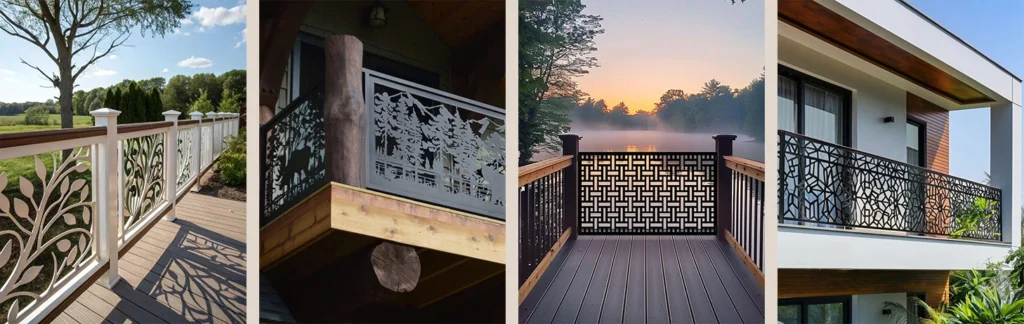
- Residential Areas and Building Balconies: These projects generally require a balance between architectural appearance and long-term protection. Powder coating offers a wide range of colors, making it easier to coordinate railings with building facades, windows, doors, and other architectural elements.
- Outdoor Parks and Roadside Facilities: Railings in these environments are continuously exposed to sunlight, rain, and temperature changes. Buyers should pay particular attention to coating weatherability, adhesion, and corrosion resistance. Selecting a high-performance finish that meets project specifications can help reduce future maintenance requirements.
- Coastal and High-Humidity Environments: Salt and moisture can accelerate metal corrosion. Buyers should carefully evaluate aluminum pretreatment, coating coverage, or anodizing sealing quality, and request relevant performance test reports from suppliers.
Application Summary: Powder coating generally offers greater flexibility for projects that require color customization and architectural coordination. Anodizing is worth considering when metallic appearance and surface hardness are priorities. For coastal and highly corrosive environments, buyers should evaluate the actual protective performance of the treatment process rather than relying solely on its name.
💡 Frequently Asked Questions
Q: Is powder coating suitable for outdoor aluminum railings?
A: Yes. High-performance powder coatings can provide good weather and corrosion resistance for outdoor aluminum railings, provided that the aluminum surface is properly pretreated and the coating meets the required performance specifications.

Huaye’s Customization Advantages for Aluminum Railings
Established in 2008, Huaye has 18 years of experience in metal product manufacturing and approximately 10,000㎡ of factory production space. The company provides OEM/ODM services for aluminum railing projects, supporting residential, commercial, and outdoor public-space applications through customized product development, material selection, surface finishing, and accessory configuration.
- Flexible Color Customization: Huaye supports standard and custom colors, with color matching based on RAL codes or customer-provided references. Samples can be provided for color and finish confirmation.
- Versatile Design Development: Modern and classic railing styles are available, with customizable patterns, textures, decorative details, and structural designs to meet different project requirements.
- Aluminum Materials and Surface Finishing: Huaye manufactures aluminum railings with powder-coated finishes to meet project requirements for appearance, corrosion resistance, and outdoor performance.
- Customized Dimensions and Accessories: Railing dimensions, structures, and matching accessories can be adjusted according to installation locations and project drawings, helping ensure compatibility with on-site requirements.
- Product Performance and Warranty Support: Product specifications include a 20-year designed service life and a 5-year warranty. Products are also designed with easy assembly, environmental considerations, and corrosion resistance in mind. Actual service performance depends on installation methods and operating conditions.
💡 Frequently Asked Questions
Q: Can Huaye provide custom colors and designs for aluminum railings?
A: Yes. Huaye supports customized colors, patterns, dimensions, structures, and accessories for aluminum railings. Buyers can provide project drawings, color references, or specifications for OEM/ODM development.
Huaye provides custom made aluminum railings with flexible colors, designs, dimensions, and powder-coated finishes. Contact our team to discuss your project requirements and request a sample.
| OEM&ODM Factory | Email:tom@huayegate.com | Whatapp:+86 13055509263 |
Powder coating and anodizing each offer distinct advantages. Powder coating provides greater flexibility in color selection, decorative effects, and architectural coordination, while anodizing offers advantages in surface hardness, wear resistance, and metallic appearance. Buyers should select the appropriate finish according to installation conditions, performance requirements, and project budgets.
As an experienced aluminum railing supplier, Huaye leverages 18 years of manufacturing experience, approximately 10,000㎡ of factory production space, and OEM/ODM capabilities to provide customized aluminum railing solutions for residential, commercial, and outdoor construction projects.