Key Takeaways
- Structure and Advantages: Aluminum railing systems consist of posts, rails, infill components, and connecting accessories. They are lightweight, corrosion-resistant, and easy to assemble.
- Product Selection: Aluminum vertical baluster, framed glass, and frameless glass railings differ in appearance, structure, cost, and application.
- Purchasing Costs: Aluminum specifications, structural design, surface treatment, accessories, and order quantities all affect the overall purchasing budget.
- Surface Finishing: Powder coating offers various colors and finishes, while coating quality directly affects outdoor weather resistance.
- Installation and Maintenance: Railing height, post spacing, and fixing methods must comply with local building codes. Choosing a manufacturer with customization capabilities helps ensure reliable project delivery.
Aluminum railings are widely used in residential balconies, staircases, outdoor platforms, and public spaces. For contractors, building material distributors, and wholesale buyers, selecting suitable custom made aluminum railings requires more than considering appearance. Structural safety, material performance, installation costs, and long-term maintenance must also be evaluated.
As a professional aluminum railing supplier, Huaye offers a range of customized solutions to help buyers select suitable products according to different project requirements.
Aluminum Railing Structure and Advantages
Basic Components of Aluminum Railings
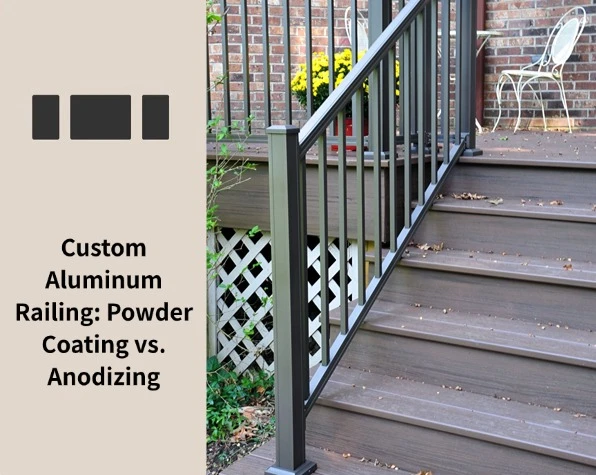
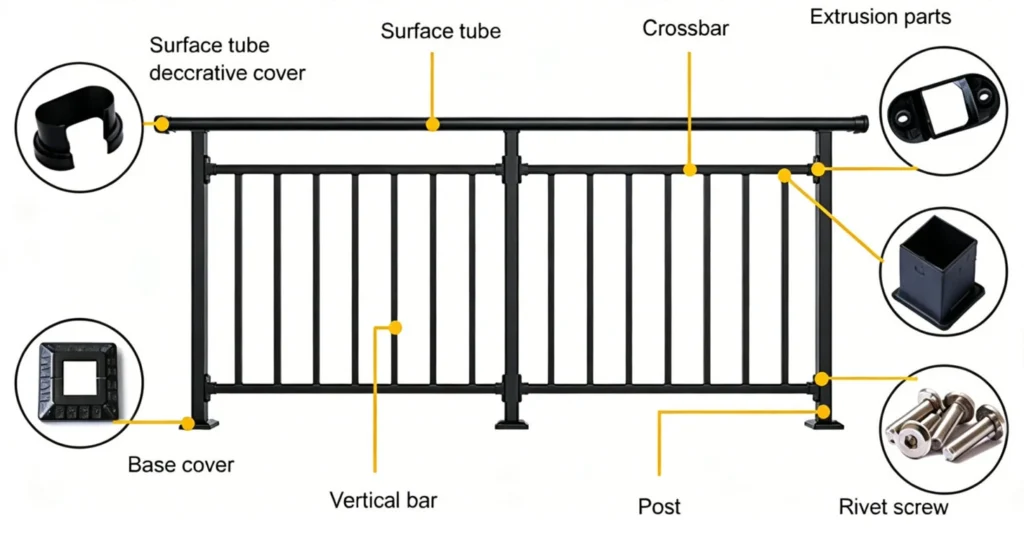
An aluminum railing system generally consists of the following components:
- Posts: The main supporting components that carry the railing structure and connect it to the ground or wall.
- Top and Bottom Rails: Connect the posts and provide support and fixing points for the infill components.
- Infill: Can consist of aluminum vertical balusters, horizontal bars, decorative panels, or glass, influencing both appearance and protective performance.
- Connecting Accessories: Include base plates, brackets, bolts, and connectors that ensure secure connections between structural components.
Key Advantages of Aluminum Railings
- Corrosion Resistance: Aluminum naturally forms an oxide layer on its surface. Combined with appropriate finishing, this helps improve corrosion resistance in outdoor environments.
- Lightweight Structure: Aluminum is relatively lightweight, making transportation, handling, and on-site installation easier while supporting various railing designs.
- Flexible Customization: Different dimensions, colors, structures, decorative patterns, and accessory combinations can be customized to suit various architectural styles.
- Easy Installation: Modular structures and standardized connection methods help improve installation efficiency.
- Low Maintenance Requirements: Compared with some traditional railing materials, aluminum does not easily rot and generally requires less routine maintenance.
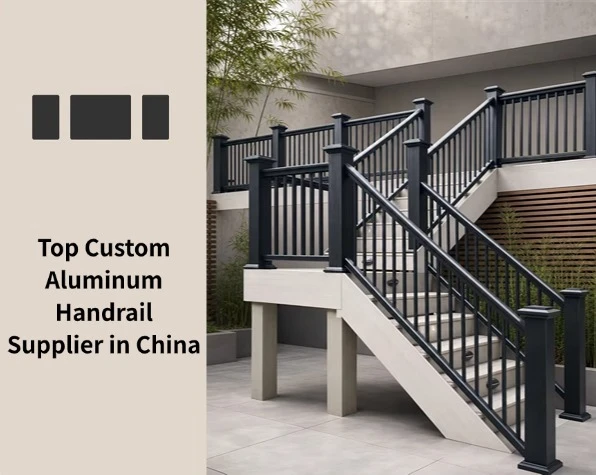
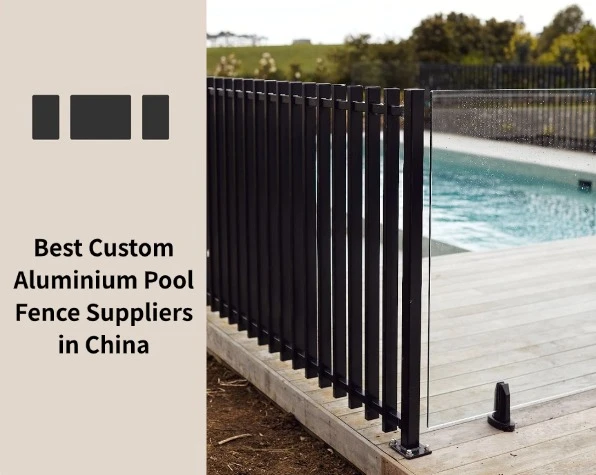
Huaye aluminum railings are suitable for residential communities, staircases, outdoor platforms, parks, and roads. Dimensions, structures, decorative patterns, and connecting accessories can be customized according to project requirements.
💡 Frequently Asked Questions
What are the main components of an aluminum railing system?
An aluminum railing system typically includes posts, top and bottom rails, infill panels, and connecting accessories. These components work together to provide structural support, protection, and the required appearance.
Aluminum Railing Types and Selection
1. Aluminum Vertical Baluster Railings
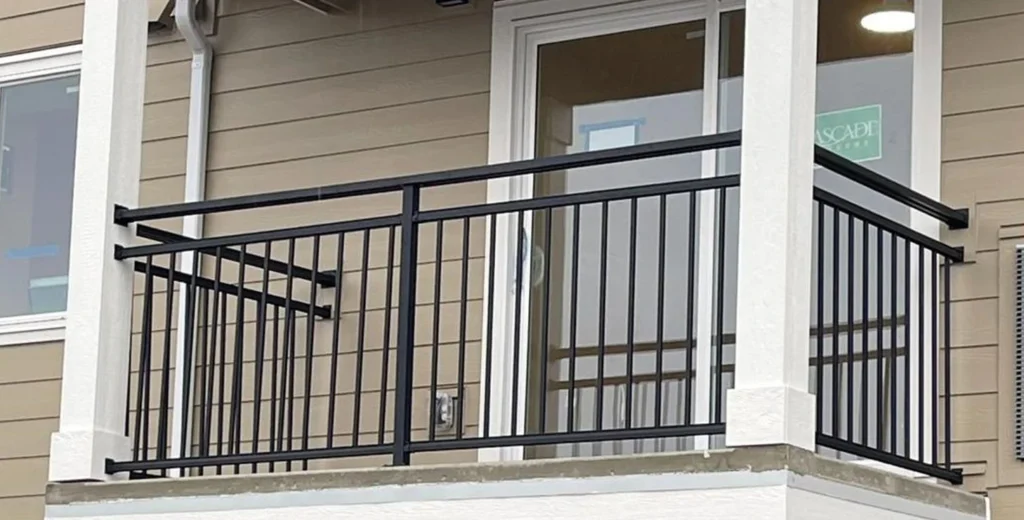
These systems consist of aluminum posts, top and bottom rails, and vertical balusters. Their structure is well-established and relatively easy to install, making them suitable for residential balconies, staircases, gardens, parks, and public areas. For projects requiring bulk purchasing and standardized installation, this type is generally easier to manage in terms of cost.
2. Aluminum-Framed Glass Railings
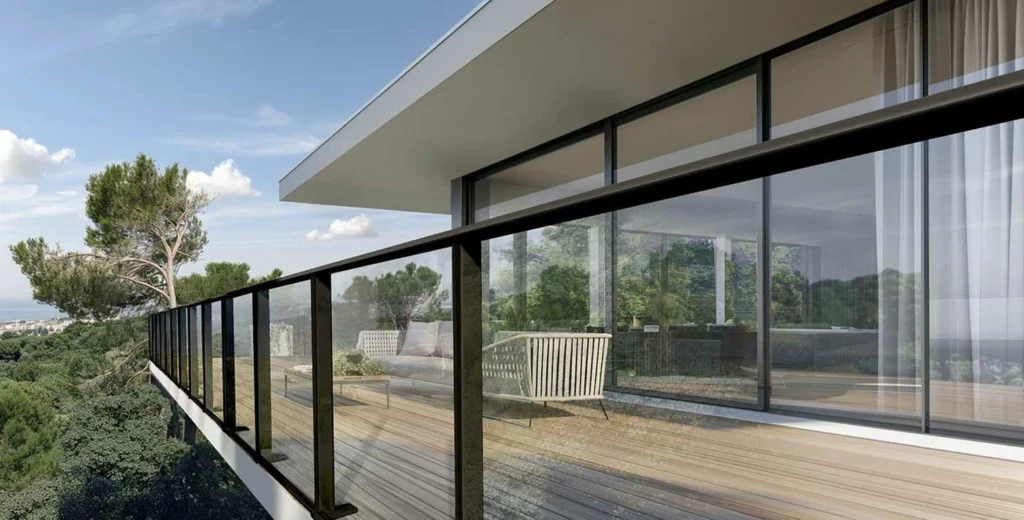
These systems combine aluminum frames with glass panels, providing protection while maintaining an open and transparent appearance. Buyers should pay attention to glass specifications, frame structures, connecting accessories, and edge protection. They are suitable for modern residential buildings, commercial properties, terraces, and viewing platforms.
3. Frameless Glass Railings
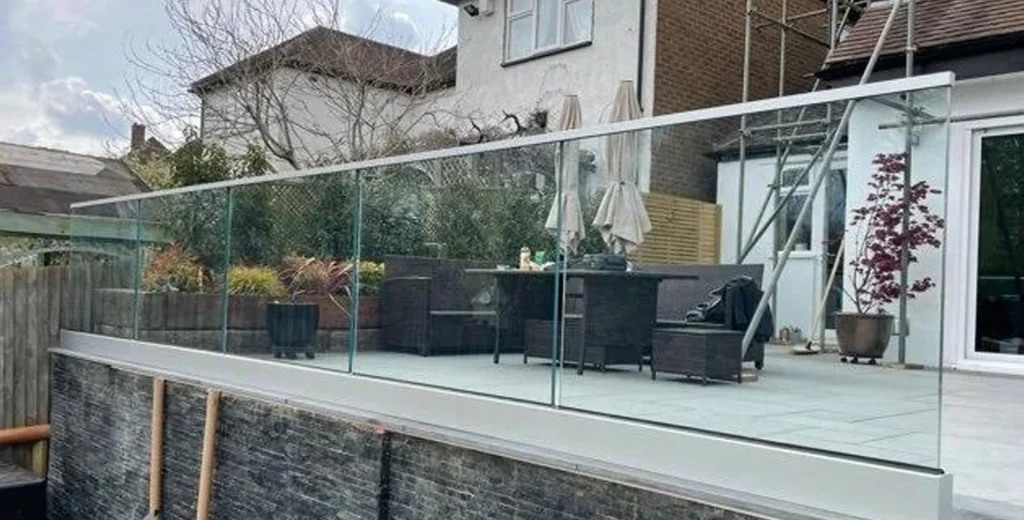
These systems use bottom fixing channels or specialized connection systems to support glass panels. Their appearance is simple and provides an unobstructed view. However, they require higher standards for glass strength, fixing systems, base support, and installation accuracy. They are commonly used in high-end residences and viewing balconies.
Comparison of Different Railing Types
| Comparison | Aluminum Vertical Baluster | Aluminum-Framed Glass | Frameless Glass |
|---|---|---|---|
| Appearance | Classic and orderly | Modern and transparent | Minimalist and open |
| Structure | Aluminum baluster infill | Aluminum frame with glass | Glass with fixing system |
| Installation Difficulty | Relatively low | Medium | Relatively high |
| Maintenance Focus | Coating and connectors | Glass and aluminum frame | Glass and fixing components |
| Cost Level | Relatively economical | Higher | Generally higher |
| Applications | Residences, staircases, parks | Balconies, terraces | High-end residences, viewing areas |
How to Choose the Right Aluminum Railing
If a project prioritizes cost control, installation efficiency, and standardized specifications, aluminum vertical baluster railings are generally a practical choice. For projects requiring better visibility and a more open appearance, framed or frameless glass systems may be more suitable.
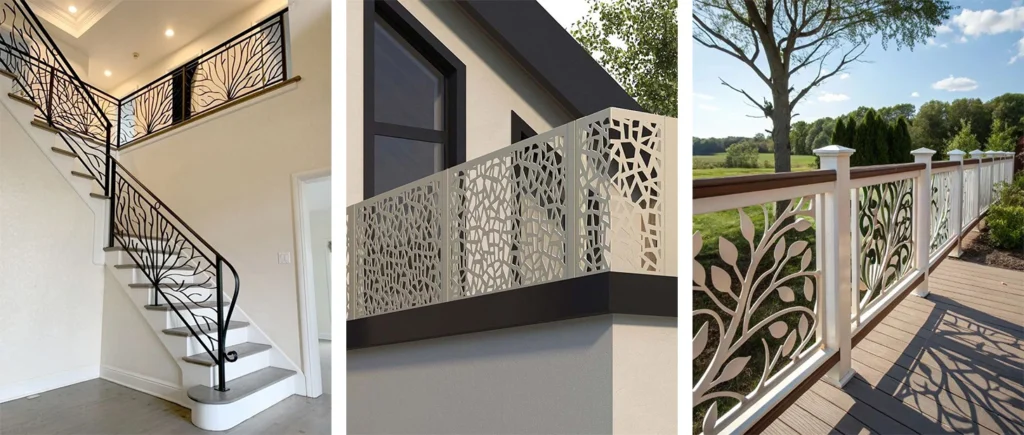
Huaye supports both modern and classic designs and can customize colors, dimensions, patterns, textures, and shapes to meet different architectural requirements.
💡 Frequently Asked Questions
Which aluminum railing style is best for residential and commercial projects?
Aluminum vertical baluster railings are suitable for projects prioritizing cost control and practical installation. Aluminum-framed glass railings offer a balance of visibility and structural framing, while frameless glass systems suit projects requiring an unobstructed view. The final choice should consider building codes, installation conditions, and budget.
Aluminum Railing Costs and Budgeting
Reference Prices for Aluminum Railings
The following figures represent general price ranges in the U.S. market. Actual prices vary depending on location, product specifications, and project conditions.
| Railing Type | Reference Price (USD/Linear Foot) |
|---|---|
| Aluminum Railings | $40–$60 |
| Glass Railings | $200–$500 |
| Frameless Glass Railings | Generally at the higher end of the glass railing price range |
These figures are for preliminary budget estimation only and do not represent Huaye’s actual quotations. Bulk purchasing prices should be confirmed based on specific drawings, product configurations, and order quantities.
Key Factors Affecting Purchasing Costs
- Material Specifications: Aluminum thickness, profile dimensions, and structural strength requirements affect material consumption and production costs.
- Customization Complexity: Special dimensions, decorative patterns, non-standard structures, and complex connection methods may require additional processing.
- Surface Treatment: Different powder coatings, colors, and special textures may result in varying finishing costs.
- Accessory Configurations: Base plates, brackets, fasteners, and other connecting accessories affect the total purchasing price.
- Order Quantity: Bulk orders help optimize material procurement, production scheduling, and packaging costs.
- Transportation and Installation: Packaging methods, shipping distances, site conditions, and labor costs should also be included in the project budget.
When choosing an aluminum railing supplier, buyers should consider more than the unit price. Production capacity, quality control, customization services, and delivery reliability are equally important.
💡 Frequently Asked Questions
How much does aluminum railing installation cost per linear foot?
In the U.S. market, aluminum railing systems may cost approximately $40–$60 per linear foot, while glass railing systems can range from $200–$500. Actual costs depend on materials, design complexity, installation conditions, and project specifications.
Aluminum Railing Surface Finishing and Weather Resistance
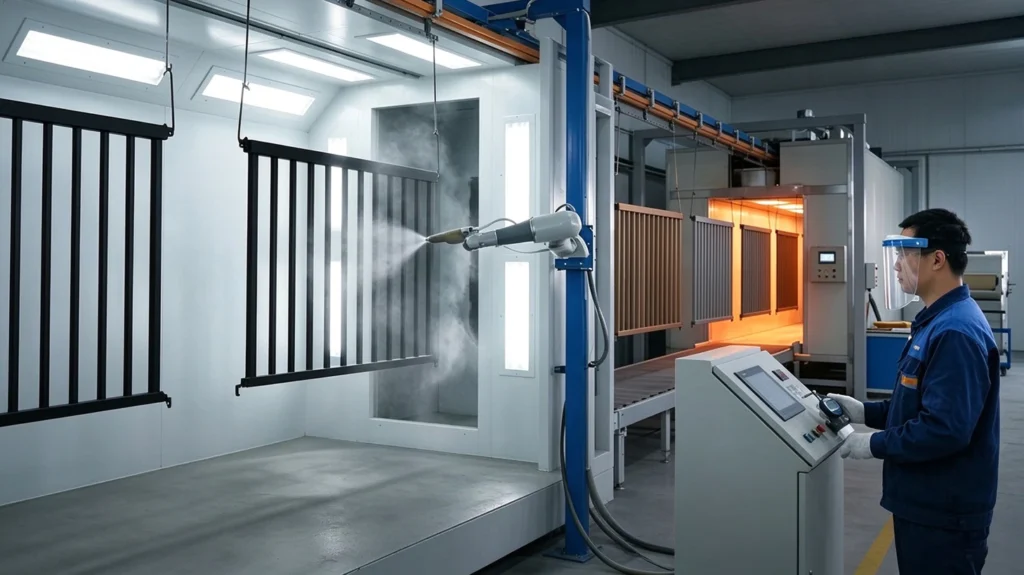
Surface finishing directly affects the appearance, corrosion resistance, and outdoor performance of aluminum railings. Powder coating is a commonly used finishing method. It provides a uniform protective layer and supports a wide selection of colors and textures.
Powder Coating Process
The powder coating process generally includes the following steps:
- Surface Pretreatment: Clean the aluminum surface to remove oil, dirt, and other contaminants.
- Electrostatic Spraying: Apply powder coating evenly to the aluminum surface.
- High-Temperature Curing: Heat the coated components to form a continuous, hardened protective layer.
- Finished Product Inspection: Check coating thickness, color consistency, and surface defects.
Colors and Coating Quality
- Huaye offers standard and customized colors. Buyers can choose common options such as black, white, and gray, as well as project-specific colors, textures, and decorative designs.
- When evaluating coating quality, buyers should focus on coating thickness, uniformity, adhesion, salt spray resistance, and UV weatherability. For coastal, humid, or industrial environments, the coating system should be selected according to actual corrosion conditions.
- Some architectural aluminum coating projects refer to performance specifications such as AAMA 2603, AAMA 2604, and AAMA 2605. The appropriate performance level should be determined based on the project environment and technical requirements.
💡 Frequently Asked Questions
What is the best finish for outdoor aluminum railings?
Powder coating is a widely used finish for outdoor aluminum railings. When selecting a coating, buyers should evaluate adhesion, weather resistance, corrosion protection, and suitability for the installation environment.
Aluminum Railing Installation, Maintenance, and Supplier Selection
Installation and Maintenance
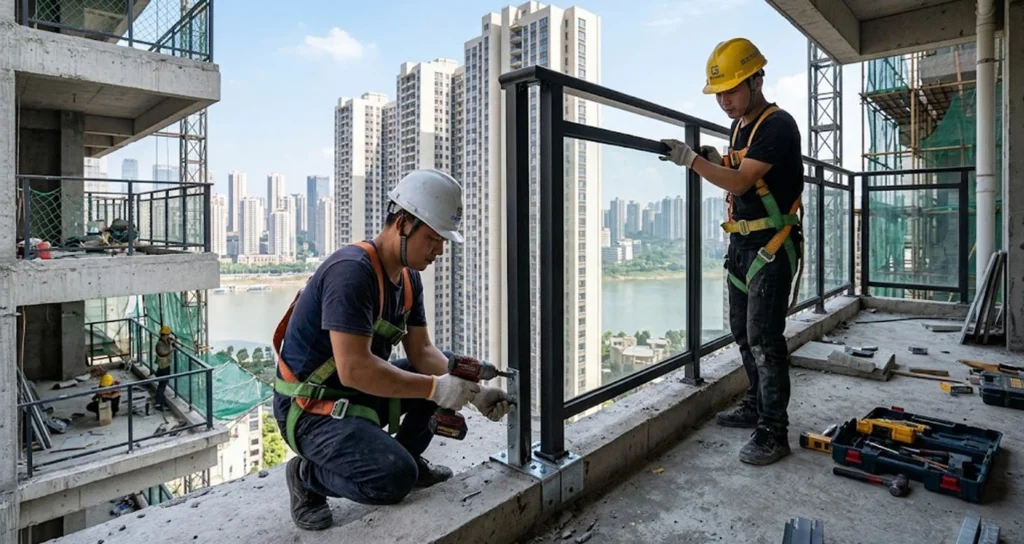
Before installation, measure the railing area’s length, height, corners, and post spacing. Check the load-bearing capacity of the ground or wall and confirm that the fixing method matches the product drawings.
Basic Installation Steps:
- Measurement and Layout: Determine the railing position, post spacing, and installation height.
- Post Fixing: Install the base plates and posts according to the site conditions, ensuring they are secure and vertical.
- Rail and Infill Installation: Connect the horizontal rails and install the vertical balusters or glass panels.
- Final Inspection: Check connection strength, overall alignment, and surface quality.
Installation Regulations: Railing height, opening spacing, and fixing strength must comply with local building codes. For example, some U.S. residential projects use a minimum guard height of 36 inches (914 mm), while 42 inches (1,067 mm) is a common requirement for commercial buildings. Actual requirements depend on local regulations and project specifications.
Routine Maintenance: Clean railings regularly with mild detergents and inspect the surface coating, bolts, and connectors for looseness or damage. In coastal and humid environments, cleaning and inspection should be performed more frequently to extend product service life.
Huaye Manufacturing Capabilities and Customization Services
Founded in 2008, Huaye has 18 years of experience in customized metal product manufacturing and operates a production facility covering 10,000 square meters. The company provides customized aluminum railing solutions for building projects of different sizes.
For residential, commercial, and public infrastructure projects, Huaye offers OEM/ODM services covering the following customization options:
- Design Styles: Modern, classic, and various decorative styles.
- Colors and Finishes: Standard colors, project-specific colors, and different coating appearances.
- Dimensions and Structures: Product dimensions and structural configurations customized according to installation conditions and project drawings.
- Patterns and Shapes: Decorative patterns, textures, and different shapes to meet design requirements.
- Accessory Configurations: Connecting accessories matched to the railing structure and installation requirements.
Huaye also provides 24-hour consultation services to help buyers discuss product specifications, customization requirements, and project solutions.
💡 Frequently Asked Questions
How long do aluminum railings last?
Aluminum railings can have a design service life of approximately 20 years when properly manufactured, installed, and maintained. Actual service life depends on material quality, coating performance, environmental exposure, and maintenance. Huaye provides a 5-year warranty, subject to the agreed product and warranty terms.
Looking for a reliable aluminum railing manufacturer? Huaye provides professional OEM/ODM services with customization options for colors, styles, dimensions, patterns, and accessories. Send us your project drawings or purchasing requirements to receive a product proposal and wholesale quotation. Contact Huaye to explore a long-term partnership.
| OEM&ODM Factory | Email:tom@huayegate.com | Whatapp:+86 13055509263 |
Selecting aluminum railings requires comprehensive consideration of structural design, material performance, surface finishing, installation regulations, and long-term maintenance costs. For bulk buyers and construction projects, standardized production capabilities and flexible customization services are equally important.
With 18 years of metal manufacturing experience, a 10,000-square-meter production facility, and OEM/ODM services, Huaye provides customized aluminum railing solutions for different building projects, helping buyers balance product quality, appearance, and project delivery requirements.